Wednesday, June 3, 2009

Evolution - The Mind’s Big Bang


How and when the human mind emerged is the most profound question facing science today. The appearance of human sentience has transformed the landscape of our planet and has propelled evolution into realms which transcend the very limitations of genetics. What forces contributed to this breakthrough? Where might the power of the human mind and intellect ultimately lead humanity?

The human mind has allowed the human species to transcend its physical limitations and has made humankind pioneers of a whole new form of evolution which is distinctly non-biological. This new realm of evolution is Cultural Evolution. It is this new dominion of evolution that has made us the most dominant life form on this planet and has set us on a trajectory that will one day take us out amongst the stars. What then? How will the human intellect continue to evolve amyst the starry ferment?


Today join us Cosmic Visions as we continue our year long celebration of the life and work of Charles Darwin and explore the origins of the human mind and human consciousness with the sixth installment of the landmark PBS television series “Evolution” – The Mind’s Big Bang.


Evolution - The Mind’s Big Bang


Friday, May 29, 2009

Evolution - The Sexual Revolution


The sexual revolution did not begin in the 1960s with flower power or with the slogan “make love and not war”. The vanguard of the sexual revolution weren’t the hippies who “wore flowers in their hair” that Scott McKenzie immortalized in his generational anthem, "San Francisco (Be Sure To Wear Flowers In Your Hair)". Rather sex can trace its humble beginnings to the true pioneers of the Sexual Revolution - the cyanobacteria and other eukaryotes at the dawn of evolutionary history.

The advent of sex may not have begun with the first micro orgasm but, it was no less earth moving.

With advent of sexual reproduction, some one and half billion years ago, life on Earth took a major evolutionary leap. Until then evolution was agonizingly slow. Before life stumbled on sex as a reproductive strategy new varieties of organisms could only arise from the accumulation of random mutations - the selection of a few typographical errors, letter by letter, in life’s genetic code. With the invention of sex, two organisms could now exchange whole paragraphs, pages and books of their DNA code, and thus evolution could proceed at a faster pace.

In evolutionary terms, sex is more important than life itself. Sex fuels evolutionary change by adding variation to the gene pool. The powerful urge to pass our genes on to the next generation has likely changed the face of human culture in ways we are only now beginning to fully understand.

Today on Cosmic Visions we continue our year long celebration of the life and work of the naturalist Charles Darwin and the epic story of life on Earth with the fifth installment of the landmark PBS television series “Evolution” – Why Sex.

Evolution – Why Sex


Tuesday, April 14, 2009

Evolution - red in tooth and claw


Today on Cosmic Visions we continue our year long celebration of the life and work of the naturalist Charles Darwin with the fourth episode of the landmark PBS television series “Evolution” - Evolutionary Arms Race.

When we consider the evolutionary history of life on Earth, the following famous adage comes to mind:


“Nature, red in tooth and claw”


I always wondered if it was indeed Charles Darwin himself who penned this famous phrase. A little research through the pages of Wikipedia and The Oxford Dictionary of Quotations, 3rd edition provided the answer.

Man...
Who trusted God was love indeed
And love Creation's final law --
Tho' Nature, red in tooth and claw
With ravine, shrieked against his creed.
--Alfred, Lord Tennyson


These words were penned by the English poet Alfred, Lord Tennyson in his poem “In Memoriam A.H.H.” and this quote comes from a group of cantos entitled, "In Memorium A.H.H." (1850). This quote comes from canto LVI, and the entire work written over a period of 17 years and completed in 1849. It is a requiem for the poet's Cambridge friend Arthur Henry Hallam, who died suddenly of a cerebral haemorrhage in Vienna in 1833, but it is also much more. It can be seen as reflective of Victorian society at the time, and the poem discusses many of the issues that were beginning to be questioned. It is the work in which Tennyson reaches his highest musical peaks and his poetic experience comes full circle. It is regarded as one of the greatest poems of the 19th century.


The original title of the poem was "The Way of the Soul", and this might give an idea of how the poem is an account of all Tennyson's thoughts and feelings as he copes with his grief over such a long period - including wrestling with the big scientific-philosophical questions of his day. It is perhaps because of this that the poem is still popular with and of interest to modern readers. Owing to its length and its arguable breadth of focus, the poem might not be thought an elegy or a dirge in the strictest formal sense.

In writing the poem, Tennyson was influenced by the ideas of evolution presented in Vestiges of the Natural History of Creation which had been published in 1844, and had caused a storm of controversy about the theological implications of impersonal nature functioning without direct divine intervention. The fundamentalist idea of unquestioning belief in revealed truth taken from a literal interpretation of the Bible was already in conflict with the findings of science, and Tennyson expressed the difficulties evolution raised for faith in "the truths that never can be proved".

Are God and Nature then at strife,
That Nature lends such evil dreams?
So careful of the type she seems,
So careless of the single life;
That I, considering everywhere
Her secret meaning in her deeds,
And finding that of fifty seeds
She often brings but one to bear,
I falter where I firmly trod,
And falling with my weight of cares
Upon the great world's altar-stairs
That slope thro' darkness up to God,
I stretch lame hands of faith, and grope,
And gather dust and chaff, and call
To what I feel is Lord of all,
And faintly trust the larger hope.


This poem was published before Charles Darwin made his theory public in 1859. However, the phrase "Nature, red in tooth and claw" in canto 56 quickly was adopted by others as a phrase that evokes the process of natural selection. It was and is used by both those opposed to and in favour of the theory of evolution.

“Nature, red in tooth and claw”

This famous quote has come to symbolise the very essence of the evolutionary struggle as outlined by Darwin’s theory of evolution by means of Natural Selection. But, is that all evolution is? Is it just an unending struggle for survival? How about cooperation? Does this play a role in evolution? Has the entire biosphere of our planet evolved into a super-organism as James Edward Lovelock outlined in his GAIA hypothesis?


Both survival of the fittest and cooperation are essential interactions between and within species and are both amongst the most powerful evolutionary forces on Earth, and understanding them may be a key to our own survival. Which aspect of our own human innate nature, raw competition or cooperation, prevails may determine our planet’s and our own long term future.

Evolution - Evolutionary Arms Race


Sunday, April 12, 2009

Evolution - Extinction


Today on Cosmic Visions we continue our year long celebration of the life and work of the naturalist Charles Darwin with the third episode of the landmark PBS television series “Evolution” - Extinction.

Far more life forms have existed on Earth than grace the skies, oceans and land masses of our beautiful blue and green planet in our current epoch. Ninety-nine percent of all the creatures that have ever existed have gone extinct. What does fate have in store for the human species? What are our own evolutionary prospects?

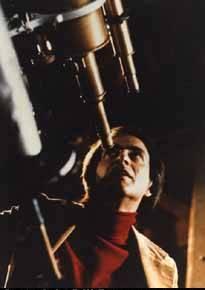
As Carl Sagan wrote in his monumental book "Cosmos":


"The fossil record speaks to us unambiguously of creatures that once were present in enormous numbers and that have now vanished utterly.* Far more species have become extinct in the history of the Earth than exist today; they are the terminated experiments of evolution".

Natural selection has shaped and sculpted an incredible life form that appears to be able to adapt to life in every conceivable ecological niche. A life form that is on the verge in directing the course of its own evolutionary future and that of the other life forms that share this planet with us. And, that life form is us – Homo sapiens.

We are the pioneers of a whole new form of evolution which is distinctly non-biological. This new realm of evolution is Cultural Evolution. It is this new dominion of evolution that has made us the most dominant life form on this planet and has set us on a trajectory that will one day take us out amongst the stars or lead to our own demise.


Five mass extinctions have occurred since life began on Earth. Are humans causing the next mass extinction? And what does evolutionary theory predict for the world we will leave to our descendants?


We will explore these and further questions in future editions of Discovery-Enterprise.

Evolution - Extinction


Thursday, March 19, 2009

Arthur C Clarke:The Man Who Saw The Future


It was one year ago today that Arthur C. Clarke went on his final odyssey into the infinite. Today on Cosmic Visions we would like to pay homage to the Man who inspired three generations of men and women to pursue careers in science and space with his visionary writings.

Sir Arthur was and will always remain the…….

The Man Who Saw the Future

Referred to as a genius, this one man think tank is considered the ultimate futurist by his devoted fans. How is it that Clarke's views of the future, as described in his many novels, have often become very present realities, such as videophones, laptop computers, E-mail, the space shuttle and cloning? One thing is for sure, Arthur C. Clarke is one of the most celebrated science fiction authors of our time. His novels 2001: A Space Odyssey and most recently 3001: The Final Odyssey, as well as more than 60 other titles have inspired generations of people, propelling us into the future, setting our minds free to explore.


You can purchase this wonderful documentary from AMAZON.COM
And, for your viewing pleasure and in order to honour Clarke’s contributions to the genre of science fiction we have:
The Martians and Us -From Apes to Aliens Episode 1.

A series about the history of British science fiction. This edition looks at our relationship with aliens, from Wells' invading Martians to the Daleks, via 2001: A Space Odyssey, the Midwich Cuckoos, and the Mekon. It also explores the genre's preoccupation with the big questions of evolution, and includes interviews with Arthur C Clarke, Brian Aldiss, Doris Lessing and Steve Jones.


Sunday, March 15, 2009

Evolution - Great Transformations


Today on Cosmic Visions we continue our year long celebration of the life and work of the naturalist Charles Darwin with the second episode of the landmark PBS television series “Evolution” - Great Transformations.

What underlies the incredible diversity of life on Earth? How have complex life forms evolved? The journey from water to land, the return of land mammals to the sea and the emergence of humans all suggest that creatures past and present are members of a single tree of life.

Evolution - Great Transformations


Thursday, February 12, 2009

Charles Darwin and his Dangerous Idea


Today marks the bicentennial of Charles Darwin’s birth. In order to mark the occasion of Darwin’s birth on 12th February, 1809 and the 150th anniversary of Darwin’s publication of “On the Origin of Species” on 24th November, 1859 today we are going to take a closer look at Darwin's idea on the origin of species. Some have even labelled Darwin's Theory of evolution by Natural Selection a "Dangerous Idea”.

Today’s video offering takes a closer look at this ''dangerous idea'' and explores why it matters more today than ever. Does it explain the past history and predict the future of life on Earth? Can it explain how life may have arisen on Earth and perhaps elsewhere in the
Cosmos? This documentary interweaves the drama of Darwin's life with current documentary sequences, introducing the key concepts behind Darwin’s Theory of evolution.


Evolution - Darwin’s Dangerous Idea